

Description
Get confident in identifying key wine aromas and faults, and understand exactly how they develop in wine.
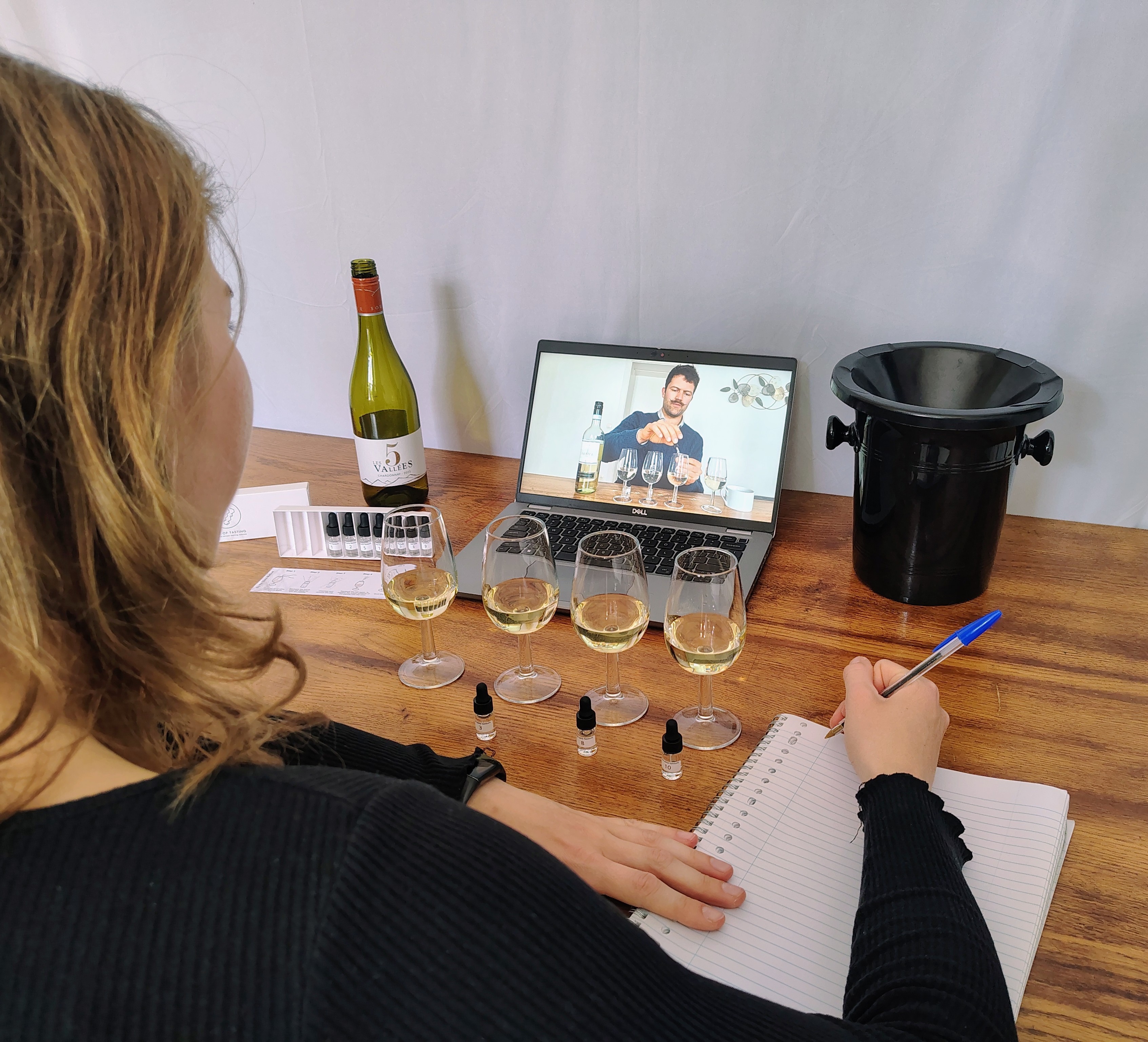
This course combines online video training with a professional kit of 10 flavouring vials, covering varietal markers, fermentation-derived aromas, ageing characteristics, and common wine faults.
What is included in this course?
- 8 pre-recorded video tutorials
- Introduction (same as the preview) [5 minutes]
- Tutored tasting: white wine flavour compounds [25 minutes]
- Tutored tasting: wine faults [30 minutes]
- Tutored tasting: red wine flavour compounds [20 minutes]
- Blind tasting and blending exercise – white wine [5 minutes]
- Blind tasting and blending exercise – red wine [5 minutes]
- Faults in red wine [5 minutes]
- Adding red wine compounds to white wine [5 minutes]
- Flavour compounds in water & triangle test [5 minutes]
- 10 flavouring vials (€290 value): consisting of 3 white wine flavours, 3 red wine flavours and 4 wine faults. These will be shipped to you.
- Supporting material: PDF of 30+ pages, containing detailed information about the 10 flavours and faults.
- Personal coaching session: 15-minute video call with Sietze Wijma, offering you the opportunity to ask questions. This call is scheduled after you completed the pre-recorded part of the course.
What will I learn in this course?
- Improved recognition of key wine flavours and faults
- Understanding the origins of these flavours and faults
- Identify personal associations with flavour compounds
- Finding out your personal sensitivity to the flavours
- Link aromas and flavours to wine styles
- Knowing how viticultural and winemaking factors affect flavours
For whom is this course?
– Sommeliers who want to sharpen their tasting skills
– Winemakers who seek to deepen their understanding of how winemaking choices affect flavour
– Wine educators looking to expand their knowledge and share it with others
– Wine judges responsible for assessing wine quality consistently
– Wine importers, buyers, retailers and other wine professionals, who need to describe flavour accurately and spot faults
How does it work?
The flavouring vials will be send to you within 1-2 working days after signing up for the course. The vials will be shipped to you via DHL Express. Depending where you are located in the world, the vials typically take 1-5 working days to arrive.
You will use the flavouring vials to make additions of the compounds to a neutral base wine. Your wine samples will then be smelled and tasted, using the videos as a guide. All content is pre-recorded, so you can learn at your own pace.
How long does the course take?
What are the entry requirements?
Which flavours/faults are included in the course?
How long is the material accessible?
Where do you ship the flavour compounds to?
Does the course fee include the flavour compounds?
Does the course fee include the wine?
What base wine should I pick?
Examples of a suitable white wine are unoaked Chardonnay, Pinot Grigio or Soave.
Examples of a suitable red wine are Languedoc Merlot, Cotes du Rhone or Bardolino.
The wines do not need to be refrigerated – they can be at room temperature.
What are the glassware requirements?
Can I repeat the course, or share the course with others?
Normally you can use a flavouring vial up to 15 times, though in this course, each vial is used multiple times across different exercises. The flavour is added to wine, to water, and used to create some blends.
How long do the flavours last?
Do I need equipment to make the flavour additions?